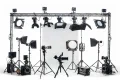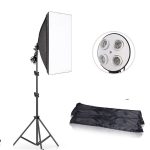




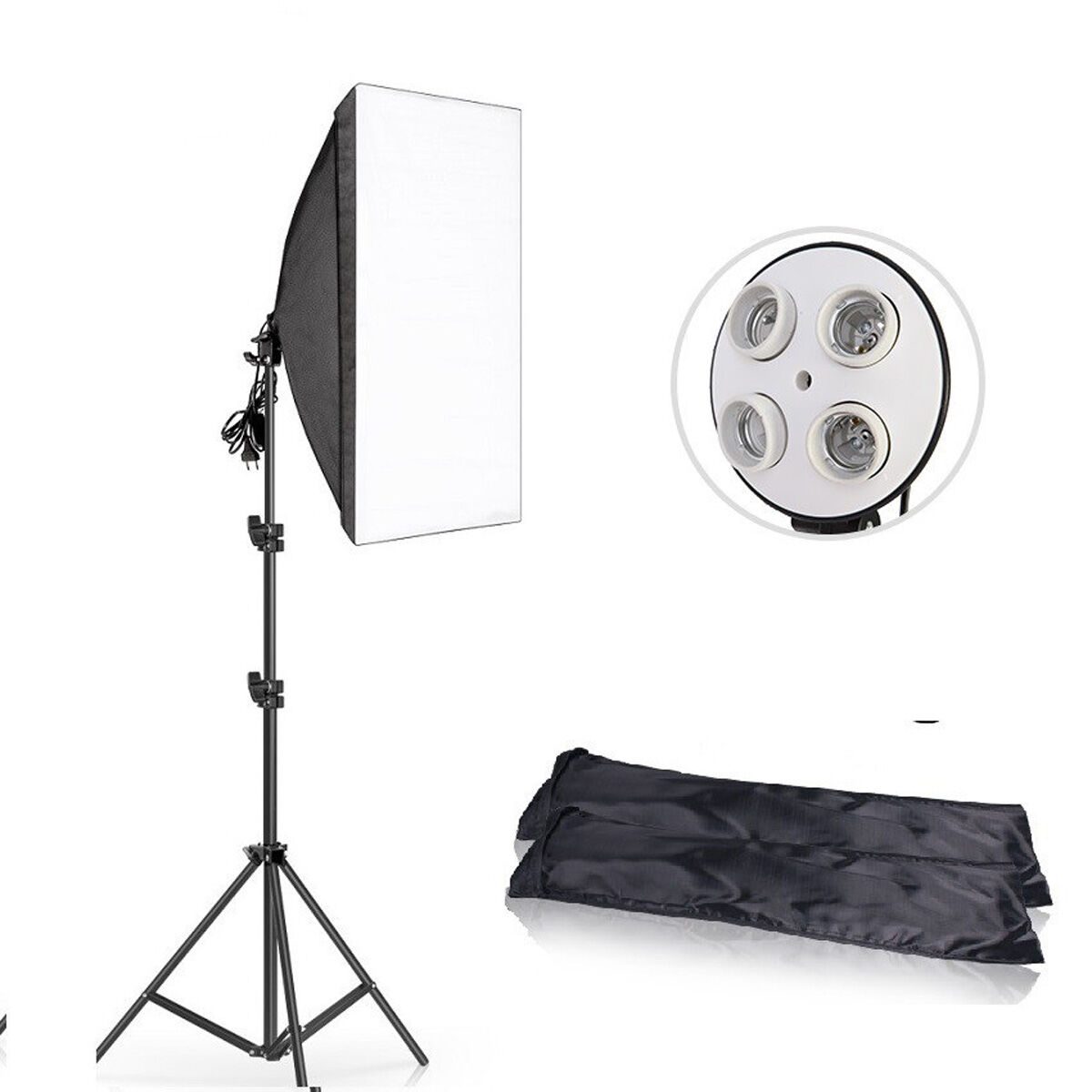
Innerspark.us – A dual softbox lighting kit achieves even backdrop illumination by positioning two lights at 45-degree angles on opposite sides of the subject, ensuring light overlaps perfectly to eliminate hotspots and shadows.
Achieving a seamless, professional-looking backdrop requires more than just pointing a light at a wall. When you use a dual softbox setup, you are essentially creating a wash of light that covers the entire surface area of your background evenly. The goal is to avoid the “vignette” effect—where the edges of your backdrop appear darker than the center—and to prevent the harsh shadows that often plague single-light setups.
Understanding the Physics of Backdrop Lighting
The primary challenge with backdrop lighting is the inverse square law. This principle states that light intensity drops off rapidly as the distance from the source increases. If your softbox is too close to the backdrop, you will get a “hotspot” (a bright, overexposed circle) right in the center. Conversely, if the light is too far, you lose intensity and contrast.
Using two softboxes allows you to cross-light the backdrop. By angling each light toward the opposite side of the background, you create a balanced exposure. The light from the left softbox fills in the shadows created by the right, and vice versa. This technique is essential for chroma key green screens, where consistent color saturation is required for clean digital compositing.
Essential Gear and Preparation
Before setting up, ensure you have two softboxes of identical size and power output. Mixing different modifiers or power levels will result in uneven color temperatures or brightness levels, which are difficult to correct in post-production. You will also need sturdy light stands with a wide footprint to ensure stability.
Step-by-Step Setup Guide
- Position your backdrop flat and wrinkle-free to prevent uneven light reflection.
- Place your first light stand approximately 4 to 6 feet away from the backdrop on the left side, angled at 45 degrees toward the center of the background.
- Repeat the process on the right side, ensuring the distance and angle mirror the first setup exactly.
- Raise the softboxes to a height slightly above your subject’s head level to ensure the light cascades downward evenly.
- Turn on both lights at the same power setting and use a light meter or your camera’s “highlight alert” feature to check for even exposure across the entire frame.
- Adjust the angles slightly inward or outward until the light intensity appears uniform from edge to edge.
Comparison of Lighting Configurations
| Setup Type | Backdrop Coverage | Shadow Control | Best Use Case |
|---|---|---|---|
| Single Softbox | Poor/Spotty | High (Harsh) | Moody, dark portraits |
| Dual Softbox | Excellent/Even | Low (Soft) | Corporate, Green Screen |
| Umbrella Setup | Moderate | Medium | General interview lighting |
Common Mistakes and How to Avoid Them
One of the most frequent errors is placing the subject too close to the backdrop. Even with perfectly positioned softboxes, if your subject is standing right against the wall, they will cast a shadow that your background lights cannot fully erase. Always maintain a distance of at least 3 to 6 feet between the subject and the backdrop to allow the background lights to do their job without interference.
Another common mistake is failing to account for ambient light. If you are shooting in a room with windows, the natural light will change throughout the day, altering the color temperature and intensity of your backdrop. Always shoot in a controlled environment where you can block out external light sources, ensuring that your softboxes are the only lights affecting the backdrop.
Troubleshooting Uneven Illumination
If you notice a bright spot in the center, pull your softboxes further back from the backdrop. If the edges are too dark, move the stands closer to the edges of the frame and angle them more sharply toward the center. It is a game of fine-tuning. Some photographers prefer using “grids” or “honeycombs” on their softboxes to further control the light spill, preventing it from hitting the subject directly if they are trying to keep the background lighting completely separate from the key light.
The Role of Light Modifiers
Softboxes are superior to umbrellas for this task because they provide directional control. An umbrella spills light everywhere, which can cause unwanted glare on your camera lens. A softbox, especially one with a recessed front, directs the light exactly where you want it. If you are struggling with light bouncing off the floor and creating a reflection, consider using black foam boards on the ground to absorb the excess light.
FAQ
Q: Can I use different size softboxes for the backdrop?
A: It is highly discouraged. Using different sizes creates varying levels of light softness and intensity, making it nearly impossible to achieve a perfectly even backdrop.
Q: What if I only have one light?
A: You can still achieve decent results by placing the light further back and using a white bounce card to reflect light onto the dark side, though it will never be as precise as a dual-light setup.
Q: Do I need to sync the background lights with my main key light?
A: Yes, all lights should be triggered simultaneously to ensure the exposure is consistent across the entire scene during the shutter capture.
Final Considerations for Professional Results
Consistency is the hallmark of professional photography. By mastering the dual softbox setup, you remove the guesswork from your workflow. Take the time to mark the positions of your light stands on the floor with gaffer tape. This allows you to recreate the exact same lighting setup in future sessions, saving you valuable time and ensuring your brand or portfolio maintains a cohesive look. Remember, the best backdrop lighting is the kind that the viewer never notices because it is so perfectly uniform.
📷 Photo by daraz.com.bd