




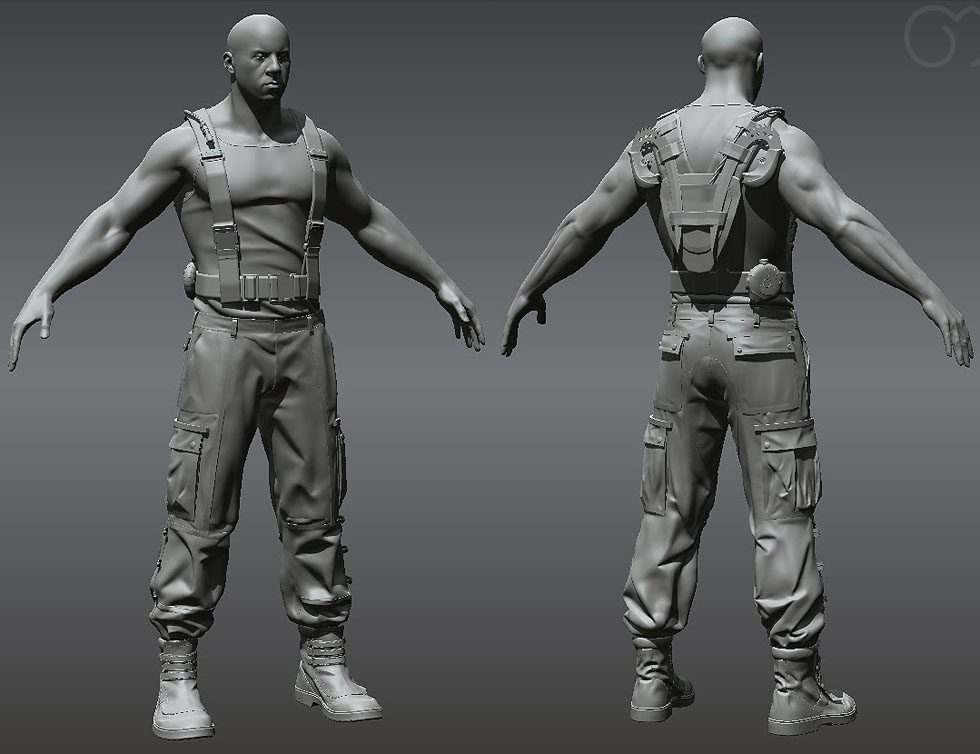
Innerspark.us – A competitive 3D character art portfolio for AAA game studios must feature 3 to 5 high-quality, game-ready character models that demonstrate mastery of anatomy, topology, texturing, and technical engine implementation. You must prioritize showing your workflow through technical breakdowns rather than just polished final renders.
The AAA gaming industry is notoriously competitive, and recruiters often spend less than thirty seconds reviewing a portfolio before deciding whether to move forward. To stand out, you cannot simply show off a pretty statue. You need to prove that your character is optimized for a production environment, meaning it is low-poly, properly rigged, and functional within a game engine like Unreal Engine or Unity.
Focus on Quality Over Quantity
Many aspiring artists make the mistake of cluttering their portfolio with ten mediocre models. This is a red flag for senior leads. They would much rather see two flawless, industry-standard characters than five that show inconsistent skill levels. Every piece in your portfolio should be at the level you want to be hired for.
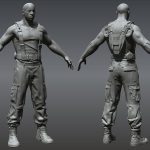
Your portfolio should show a clear understanding of the full pipeline. This includes high-poly sculpting in ZBrush, retopology in Maya or TopoGun, UV unwrapping, baking maps in Marmoset Toolbag, and texturing in Substance 3D Painter. If your work looks great in a static render but has messy topology or stretched UVs, you will likely fail the technical art test during the interview process.
Essential Portfolio Components
Recruiters look for specific technical proficiency. You should include a variety of character types to show versatility, such as a realistic human, a stylized creature, and a hard-surface character like a robot or armored soldier. Below is a breakdown of what each project entry should include to satisfy a technical director.
| Component | Purpose | Technical Requirement |
|---|---|---|
| High-Poly Sculpt | Demonstrates anatomical knowledge | High-detail ZBrush sculpt showing secondary and tertiary forms |
| Game-Ready Mesh | Demonstrates optimization skills | Clean edge loops, proper topology for deformation, under 100k tris |
| Texture Maps | Demonstrates material definition | PBR workflow (Albedo, Roughness, Metallic, Normal, AO) |
| Technical Breakdown | Demonstrates industry readiness | Wireframe overlays, UV layouts, and engine viewports |
Steps to Build Your Portfolio
Building a portfolio that gets noticed requires a systematic approach. Follow these steps to ensure your presentation aligns with professional studio expectations.
Read also: Zippered Artist Portfolio Binder: How to Organize Interchangeable Pages
- Select your concept: Choose a character design that allows you to showcase a specific skill, such as complex fabric folding, realistic skin pores, or intricate mechanical hard-surface modeling.
- Block out and sculpt: Start with a base mesh and focus on silhouettes. Do not rush into detailing until the proportions are perfect, as anatomy is the most common point of failure for juniors.
- Retopologize for performance: Ensure your character is optimized. Focus on edge flow around joints like elbows and knees to guarantee that the mesh will deform correctly when animated.
- Bake and texture: Use a low-poly mesh and bake the high-poly details onto it using a normal map. Apply realistic PBR materials, ensuring you capture the difference between surfaces like leather, metal, and skin.
- Compose your presentation: Use Marmoset Toolbag or Unreal Engine 5 to light your character. Use a neutral background so the character remains the focal point. Include a turntable video to show the model from every angle.
- Document your process: Create a breakdown sheet that shows your wireframe, your UV layout, and your texture sets. This proves you have nothing to hide and understand the technical limitations of game development.
Common Mistakes to Avoid
One of the biggest mistakes is including “filler” content. If you have an old project from three years ago that does not meet your current standard, delete it. Your portfolio is only as strong as your weakest piece.
Another common oversight is ignoring the presentation. You might have an amazing model, but if the lighting is flat or the camera angle is awkward, the character will lose its impact. Learn the basics of three-point lighting to add drama and depth to your work. Additionally, ensure your portfolio website is fast-loading and mobile-responsive. If a recruiter has to wait ten seconds for your images to load, they will close the tab.
Addressing Technical Proficiency
AAA studios want to know you can work within a team. This means your file naming conventions, folder structures, and layer management should be clean. If you are sharing a breakdown, mention the software used and the time spent on the project. This gives recruiters context on your efficiency.
Do not shy away from showing your weaknesses. If you struggle with hard-surface modeling, do a project specifically focused on it. Being honest about your current skill level while showing a clear trajectory of improvement is often more attractive to a lead artist than someone who claims to be a master of everything but lacks depth in any specific area.
Frequently Asked Questions
Q: How many characters should I have in my portfolio?
A: Three to five high-quality, production-ready characters are sufficient. Focus on quality and technical depth rather than quantity.
Q: Do I need to show my wireframe?
A: Yes, absolutely. Showing wireframes is essential to prove that you understand topology and optimization for real-time game engines.
Q: Should I include fan art of existing game characters?
A: It is better to create original designs or use concepts from artists with permission. Fan art can be acceptable if it demonstrates a unique interpretation, but original work is generally preferred by hiring managers.
Lastly, keep your portfolio updated. The game industry evolves rapidly, and the tools you use today might change tomorrow. Regularly replacing older pieces with newer, more refined work keeps your portfolio relevant and shows potential employers that you are constantly learning and adapting to new technology.
📷 Photo by webneel.com