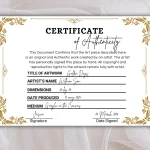




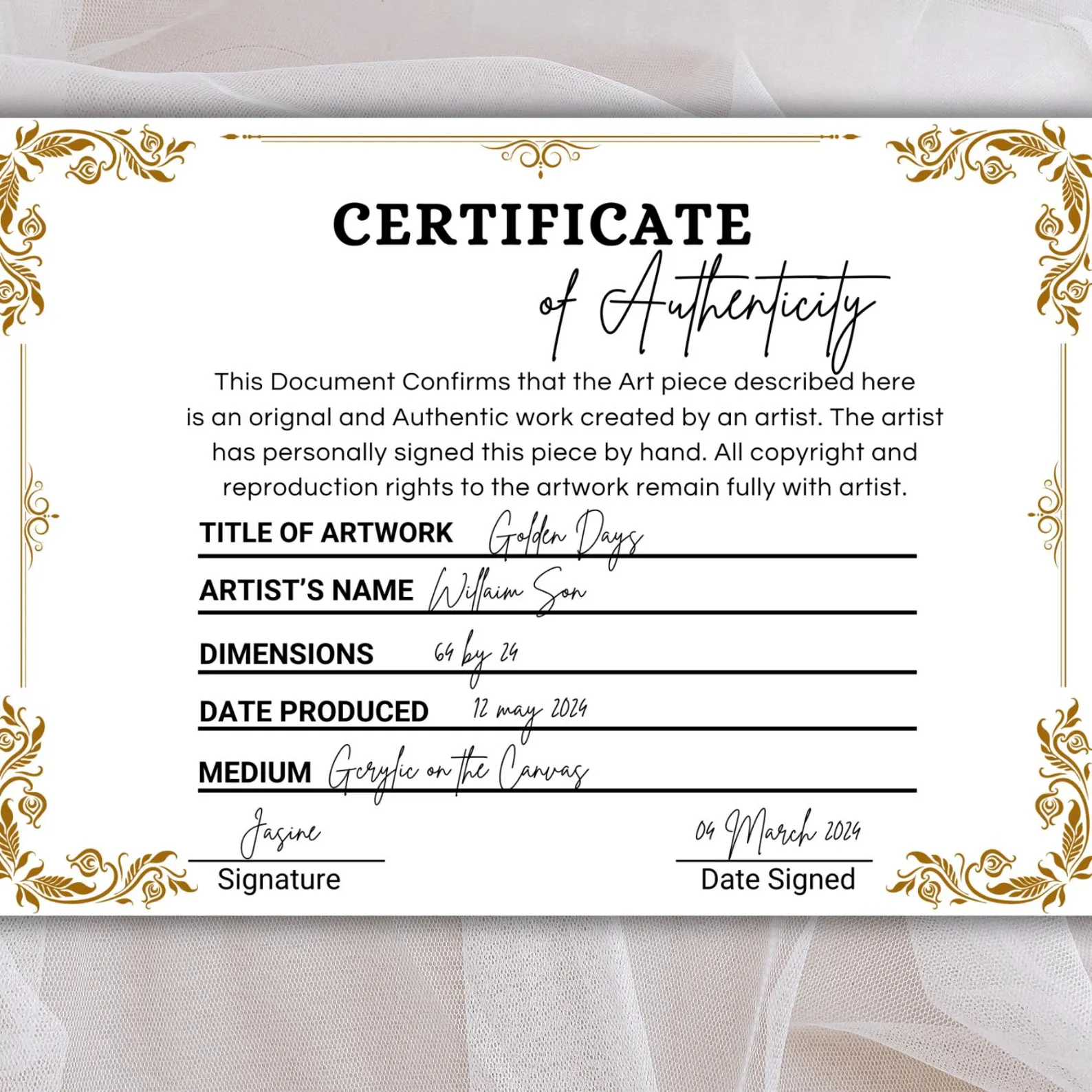
Innerspark.us – An archival Certificate of Authenticity (COA) is a formal document verifying an artwork’s provenance, materials, and creator, serving as a permanent legal record that protects both the buyer’s investment and the artist’s legacy.
For art collectors, a Certificate of Authenticity is more than just a piece of paper; it is the definitive proof of an object’s identity in the secondary market. Without a reliable COA, an artwork is often viewed as “unattributed” or “anonymous,” which can drastically reduce its resale value or render it impossible to sell through reputable auction houses. When purchasing art, buyers must ensure that the document provided is not merely a generic receipt but a comprehensive archival record designed to withstand the test of time.
The Essential Anatomy of an Archival COA
An archival COA must be produced on acid-free, high-quality paper using permanent, lightfast inks. If the document itself fades or crumbles over time, the provenance of the artwork is effectively lost. The content must be precise, leaving no room for ambiguity regarding the physical attributes of the piece or the legal rights transferred to the buyer.
Beyond the basics, an archival COA should act as a “birth certificate” for the art. It links the physical object to the creator through specific identifiers that are difficult to replicate or forge. Buyers should look for detailed descriptions that go beyond the title, such as the specific pigments used, the substrate, and the exact dimensions of the piece.
Key Data Points for a Comprehensive Certificate
When reviewing a COA, verify that it contains the following critical information. If any of these fields are missing, the document may be insufficient for long-term archival purposes.
| Information Field | Description/Purpose |
|---|---|
| Artist Identification | Full legal name and contact details of the creator. |
| Artwork Title | The official title as recorded in the artist’s inventory. |
| Creation Date | The specific year or range of years the work was completed. |
| Medium and Materials | Detailed list of pigments, surfaces, and binders used. |
| Dimensions | Height, width, and depth in both metric and imperial units. |
| Edition Details | If applicable, the number of the print within the total edition size. |
| Signature/Seal | Original wet-ink signature or a tamper-evident holographic seal. |
Steps to Validate an Artwork’s Authenticity
As a buyer, you should not take a COA at face value. Follow these steps to ensure that the document you receive is legitimate and provides the security you need for your collection.
- Cross-reference the artist’s signature on the COA with known examples of their work.
- Check the provenance chain; ensure the COA accounts for any previous owners or gallery representations.
- Inspect the physical document for security features, such as watermarks, embossed seals, or unique serial numbers that can be tracked in an online registry.
- Contact the artist or their estate directly to confirm the issuance of the certificate if the artwork is of significant value.
- Store the COA in a fireproof, climate-controlled environment, separate from the artwork itself, to prevent loss or damage.
Common Pitfalls and Red Flags
One of the most frequent mistakes buyers make is accepting a digital-only COA without a physical, archival counterpart. While digital provenance via blockchain is a growing trend, it should complement, not replace, a physical document that can be handed down with the artwork. Be wary of certificates that are printed on standard office paper or lack a clear, verifiable contact method for the issuer.
Another red flag is vague descriptions. If the COA simply says “Oil on Canvas” without specifying the type of canvas or the quality of the paint, it provides little forensic value. A professional artist should be able to account for the materials used, as these factors directly dictate how the piece should be stored and conserved. If a seller is hesitant to provide detailed information, consider it a warning sign regarding the transparency of the artwork’s history.
The Importance of Provenance Documentation
Provenance is the documented history of ownership. While the COA focuses on the creation, it should also include a space for the transfer of ownership. Every time the artwork changes hands, the new owner should ideally receive the original COA along with a bill of sale. This chain of custody is what allows art to appreciate in value, as it proves that the work has been kept by reputable collectors or institutions.
If you are buying a piece from a secondary market, ensure the COA is updated. Some artists offer a service where they verify the work for new owners and issue a “re-issue” or “transfer” certificate. This adds a layer of modern verification that bridges the gap between the original creation and the current market environment.
Frequently Asked Questions
Q: Is a digital COA sufficient for an archival collection?
A: While digital records are useful for tracking, a physical, acid-free paper document is still the industry standard for provenance and should always accompany the artwork to ensure its long-term value.
Q: What should I do if the original COA is lost?
A: Contact the artist or the gallery that represented the work. Many maintain internal archives and may be able to issue a replacement certificate based on their records, though they may charge a fee for this administrative service.
Q: Does a COA guarantee that the artwork is a masterpiece?
A: No. A COA only authenticates the identity and origin of the work. It does not provide an appraisal of artistic merit or current market value, which are determined by market demand and expert opinion.
Ultimately, the Certificate of Authenticity is the bridge between the artist’s studio and your home. By demanding high-quality, archival documentation, you are not just buying a decorative object; you are acting as a steward of cultural history. Ensure that every piece you acquire comes with the paperwork necessary to prove its validity for generations to come.
📷 Photo by etsy.com