



Innerspark.us – Baryta archival art paper replicates the authentic look and feel of traditional silver-halide darkroom prints by utilizing a genuine barium sulfate coating that provides exceptional d-max, sharp image detail, and a luxurious semi-gloss finish for high-end inkjet printing.
For decades, the standard for professional photography was the fiber-based darkroom print. Artists and galleries prized these prints for their subtle sheen, incredible depth in shadow areas, and archival longevity. As digital printing technology evolved, the demand for a medium that could bridge the gap between pixel-perfect sharpness and the tactile elegance of a chemical print led to the development of Baryta inkjet papers.
What Makes Baryta Paper Unique
Baryta—derived from the mineral barite—refers specifically to a layer of barium sulfate applied to the base of the paper before the ink-receptive layer is added. In traditional photography, this layer served to smooth out the texture of the paper fibers, ensuring that the light-sensitive emulsion sat perfectly flat and sharp. In the inkjet world, this layer performs a similar function by providing a superior base that prevents ink spread and allows for higher resolution.
The primary advantage of using a true Baryta paper is the D-max, or the maximum black density that the paper can achieve. Because of the barium sulfate coating, the ink sits on the surface rather than soaking deep into the paper fibers. This leads to richer blacks and more vibrant color reproduction, making it the gold standard for black-and-white fine art photography.
Comparing Traditional Fiber-Based Papers vs. Baryta Inkjet
| Feature | Traditional Fiber-Based | Baryta Inkjet Paper |
|---|---|---|
| Base Material | Alpha Cellulose or Cotton | Alpha Cellulose or Cotton |
| Coating | Barium Sulfate (Baryta) | Barium Sulfate + Ink Receptive Layer |
| Surface Finish | Semi-gloss or Satin | Semi-gloss or Satin |
| Longevity | Highly Archival | Archival (Acid-Free/Lignin-Free) |
| Process | Chemical Darkroom | Pigment-based Inkjet |
Essential Tips for Printing on Baryta Media
Achieving gallery-quality results on Baryta paper requires more than just high-quality files. Because these papers are coated with a specialized surface, they are prone to physical damage if handled incorrectly. Always wear cotton gloves to prevent skin oils from leaving permanent marks on the surface, especially in the dark areas of your print where oils will alter the gloss level.
Another common mistake is failing to use the correct ICC profile. Because Baryta papers have a unique surface structure, the standard profiles provided by your printer manufacturer may not be accurate. Using a custom ICC profile for your specific printer and paper combination is essential to ensure that the subtle transitions in your highlights and the deep richness of your shadows are rendered correctly.
Practical Steps to Achieve the Perfect Print
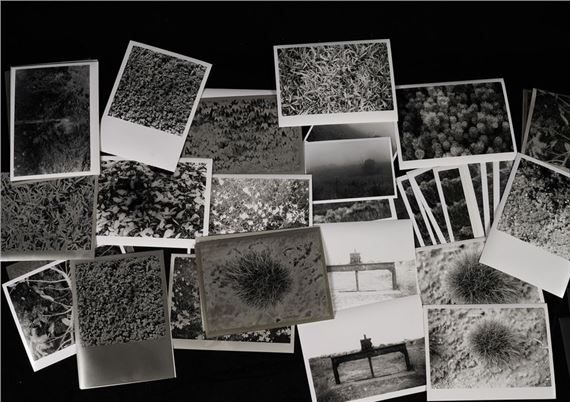
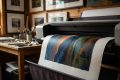
📷 Photo by mutualart.com
To get the best out of your Baryta prints, follow these steps to manage your workflow from screen to paper:
- Calibrate your monitor to a brightness level that matches your viewing environment, ideally between 80 and 100 cd/m2.
- Soft-proof your image in editing software using the specific ICC profile for your chosen Baryta paper to see how the gamut compression will affect your colors.
- Clean your printer heads and perform a nozzle check to ensure no streaks appear on the high-gloss surface of the paper.
- Load the paper carefully, ensuring the print side is facing the correct direction, and set your printer media settings to “Fine Art” or “Baryta” to ensure the correct ink load.
- Allow the print to dry completely in a dust-free environment for at least 24 hours before mounting or framing to prevent surface scuffing.
The Archival Quality Factor
When selecting a Baryta paper, verify that it is “acid-free” and “lignin-free.” These terms indicate that the paper will not yellow or become brittle over time. Most high-quality Baryta papers are made from 100% cotton rag, which provides the best structural integrity for long-term display. If you are selling your work or displaying it in a gallery, these archival certifications are vital to maintaining the value of the piece over many years.
Common Challenges with Baryta
One challenge photographers face with Baryta is its tendency to curl. Because of the heavy barium sulfate coating on one side of the paper, the sheet can react to humidity changes. To minimize curling, store your paper in its original packaging in a climate-controlled room. If a print does curl after printing, place it face-down on a clean, flat surface under a weight for a few hours, or use a de-curling tool specifically designed for fine art prints.
FAQ: Common Questions About Baryta Inkjet
Q: Can I use dye-based inks on Baryta paper?
A: While you can technically print with dye inks, they are not recommended for Baryta. Pigment-based inks provide significantly better archival properties and shadow depth, which are the main reasons for using Baryta paper in the first place.
Q: Why does my Baryta print look different in the light?
A: Baryta paper has a slight surface texture and semi-gloss finish that reacts to the angle of light. This is known as “bronzing” or “gloss differential,” which is a normal characteristic of the material and often adds to the classic “darkroom” aesthetic.
Q: Do I need a special printer for Baryta?
A: No, any high-quality inkjet printer that supports thick media can print on Baryta. However, printers with a dedicated “Photo Black” ink cartridge will produce significantly better results than those relying on “Matte Black” ink.
Ultimately, choosing Baryta paper is an artistic decision. It is an investment in the presentation of your work, acknowledging that the medium itself is a vital component of the image. By paying attention to the handling, profiling, and storage of these prints, you ensure that your digital photography carries the same weight, prestige, and longevity as the master prints of the film era.
📷 Photo by mutualart.com